
How Faceless YouTube Channels Are Really Built in 2026
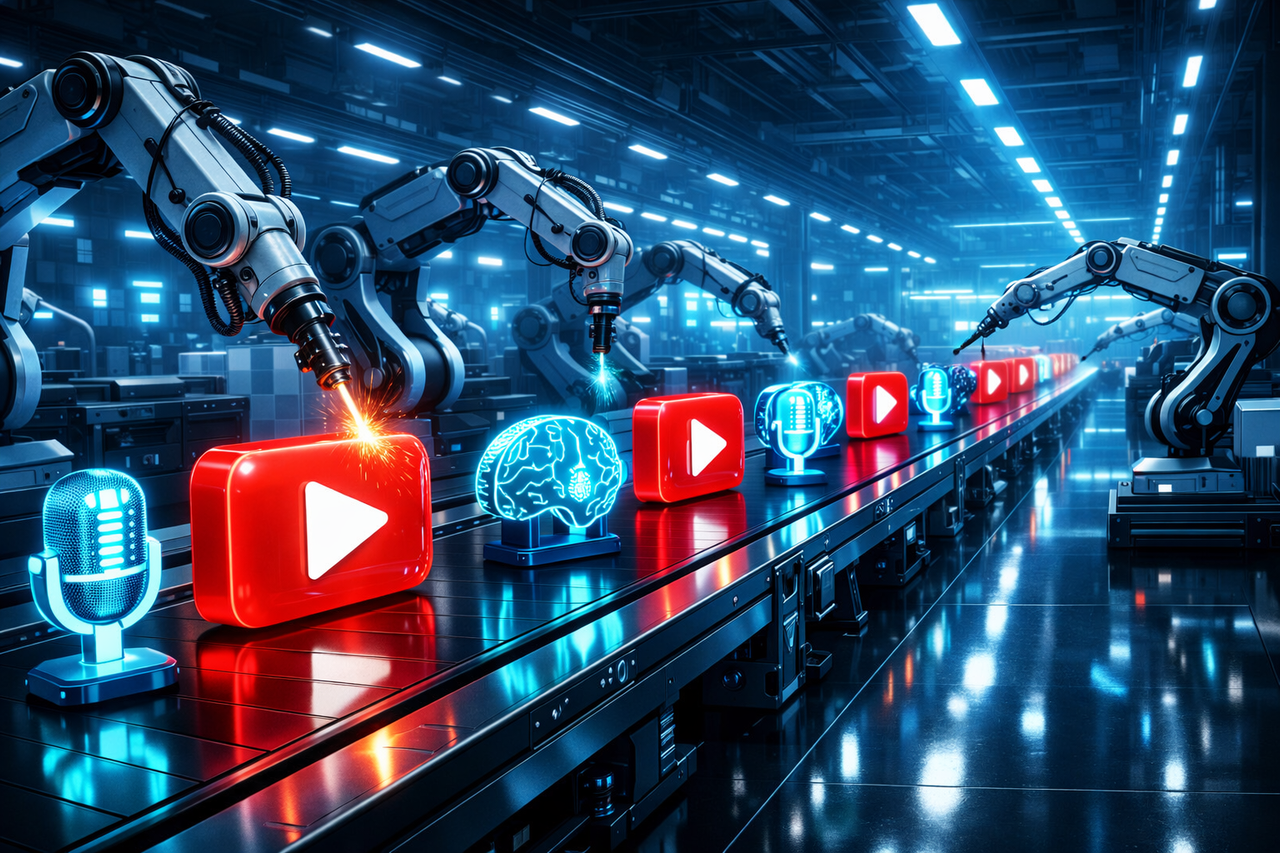
1. The Myth vs. Reality of Faceless YouTube Channels
Today in 2026, faceless YouTube channels have become one of the most common things in the world of digital content creation. But behind the huge profits new investors show in screenshots, there’s a technical battle that not many people talk about. To really understand this field, you have to face reality in the language of numbers.
First: the myth of easy and fast money
The myth says faceless channels are the fastest way to make quick money. Everyone thinks it’s just using an AI tool to make a script, putting a voice over a few stock images, publishing the video, and waiting for views. But no—the truth is this belief comes from influencers selling the dream that automation means you’ll never work again. In 2026, algorithms can easily detect this type of content and treat it as weak content with no real value. It gets classified as repetitive content, which can lead to monetization rejection or your videos not reaching an audience at all. The myth also says you don’t need any capital and won’t pay a single dollar. In reality, the time you waste without a strategy is the most expensive capital you can lose.
Second: the reality — building systems and strategy
Reality puts tough conditions on success on YouTube. It’s no longer about luck. A successful channel is the result of a well-planned production system, almost like running a factory.
In reality, you’re not just making a video—you’re building a system that lets you produce many videos. This system starts with keyword research using analytics tools, then producing the script through a mix of machine execution and your human touch, and it ends when you start editing.
These channels are considered long-term investments. They’re digital assets—every time you keep going and publish a new video, their value increases. So when you focus on consistent content instead of short-term trends, you know you’re staying in the game.
Third: hobby vs scalable business
There’s a big difference between someone who makes videos as a hobby and someone who decides to invest in YouTube channels. A hobby channel usually relies on random individual effort. The owner does everything alone without professional tools, and often quits when they face their first technical problem or when results take too long. Production can even stop if the owner gets sick.
But for someone who decides to invest, the game is different—and that’s what’s happening in 2026. They build a system using AI tools or even a team of freelancers so the channel keeps running and growing while they sleep. If the channel succeeds, they can reuse the same system and apply it to 10 different channels in different niches with the same quality and without starting from scratch.
The difference between success and failure in faceless channels is mindset. If you enter with a “hobby” mindset looking for shortcuts, you’ll hit the wall of brutal competition. But if you enter with the mindset of building an investment system, you’ll discover that YouTube in 2026 is one of the biggest opportunities to build sustainable digital wealth. Automation isn’t magic—it’s a multiplier for your smart effort and strong strategy.
2. The Content Factory Model
Standing out on YouTube is no longer about waiting for inspiration to film or hoping for a creative moment. In 2026 the situation has completely changed. Success now belongs to those who follow the content factory model. This model turns a channel from just a platform where you upload videos into a full production line running on timing and numbers, literally working with the precision of a Swiss watch. Every second in the video is treated like a product passing through a strict quality engineer.
The factory concept
YouTube channels are no longer a one-person job. They need to operate like a production machine. In the past, a creator did everything: thinking, writing, recording, and editing. But when you operate like a factory, you divide the work. The goal is to turn the video creation process into small repeatable tasks that happen with every video and can be automated. This shift in thinking lets you manage 5 to 10 channels with the same effort that a hobbyist spends on one channel, because the system runs the work, not the person.
Production line stages — breaking down the work
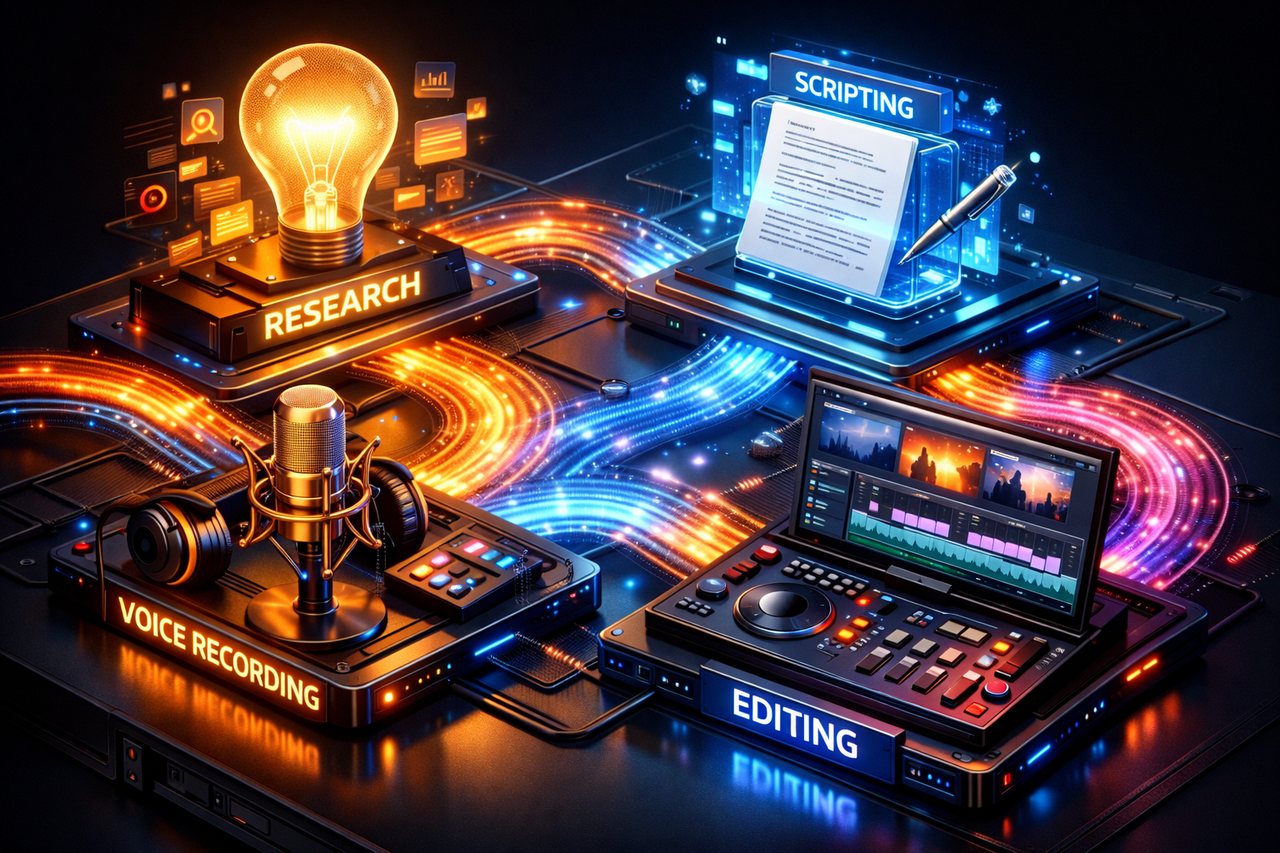
The content factory runs on four main stages, and each stage works like a machine in the factory serving the production line.
Stage one: the research and strategy station
Here we look for the content we’ll present to a specific audience through the video. That audience is waiting for a certain type of content, so instead of waking up every day asking “what should I talk about today?”, the factory already has ideas planned for the next three months. This stage relies on data that comes from AI analysis of market gaps.
Stage two: the script and text engineering station
In the factory, the script isn’t just words—it’s visual engineering. Inside the factory it’s divided into three parts: the hook in the first 5–30 seconds to keep the viewer watching, the meat which is the real value the viewer takes from the video, and the CTA that pushes the viewer to subscribe and like. Here, the intelligence of ChatGPT or Claude is combined with a human touch to make sure the script includes storytelling that connects with the audience emotionally, not just dry information.
Stage three: the technical production station
This is where the work and results start to appear, and where the real value of automation shows up. As soon as the script is finished, it gets sent to a voice tool to generate narration, then to video tools to create the visual scenes. Inside the factory there are ready-made editing templates, which means turning text into a video only takes a few minutes while keeping a consistent visual identity across all videos.
Stage four: the publishing and optimization station
The final stage doesn’t end with just uploading the video. The factory still tests thumbnails and titles, schedules the video for the hours when the audience is most active, and optimizes the description and keywords to ensure it appears in top search results.
Turning the system into a repeatable pipeline
This repetition is what builds your brand. When a viewer enters your channel, they already know what to expect in terms of quality and style. This system also protects you from burnout, because the work doesn’t depend on your mood or physical energy.
Power and success in 2026 don’t belong to the person who works the most hours. Success belongs to the person with the smarter system—the one who built the better production factory. That’s what turns a channel from just a money experiment into a high-value digital asset in the market.
3. Reverse Engineering Viral Videos
The videos that get reach rely on reverse engineering, and this is one of the strong strategies that content giants use in 2026. Instead of trying to reinvent the wheel and risking making content nobody cares about, the pro goes and analyzes what ideas worked, breaks them down into elements, and rebuilds them with higher quality and a unique touch.
Studying successful content
The first steps in reverse engineering: stop watching videos as a consumer and start looking at them like an engineer. Check out the channels in your niche that get millions of views even if they’re small, or videos that keep getting views year after year. For example, if you’re in the “tech and AI” niche, and you find a video called “How the World Will Change in 2030” that got 5 million views in a month—don’t watch it for fun. Take notes: what was the first line? What color was the background? How many times did the scene change in the first 10 seconds?
Analyzing visual and audio patterns
Video length and pacing
The secret isn’t that the video is long, it’s in the density of the info. Viral videos have a fast pace. You’ll notice that successful videos in mysterious niches change camera angles every few seconds to grab the viewer’s attention.
Storytelling style
Any video that gets traffic and reach is basically a story, but told in an entertaining way. Analyze the story and ask yourself how it started—did it have a twist in the middle? Especially in science videos, you’ll notice the video starts with a confusing hook, then research steps, then the solution comes.
Visual elements and hooks
The visual “hook” is what stops viewers from scrolling.
Practical example: you’ll see videos about “making money online” always start with a strong shot (a digital wallet, or a fast-rising chart). This is a proven visual pattern for success.
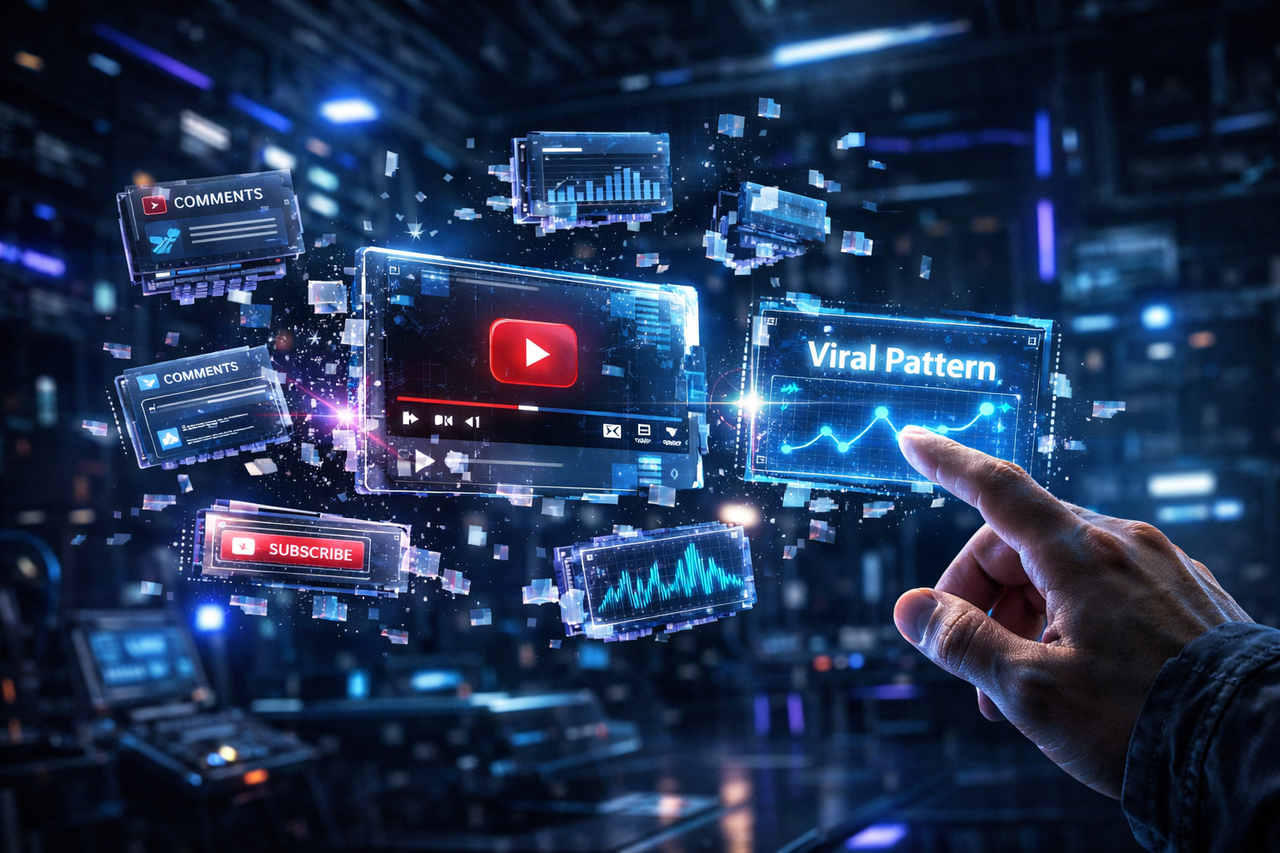
Reverse engineering doesn’t mean copying the words; it means improving the content after understanding the patterns. So how can you enhance or develop content? Try higher visual quality, fresher information, adjust the hook.
Look at this article to understand reverse engineering: you found a video in the money/business niche titled “Why Rich People Don’t Buy Expensive Cars.”
Start analyzing: length: 12 minutes, style: starts with a destroyed Porsche image, pacing: dramatic background music, audience: people interested in cars, finance culture, and saving.
Re-Engineering:
- Your new title: “Why Are the Rich Selling Their Real Estate in 2026?” (You took the same “philosophy,” which contradicts audience expectations, but applied it to a more current, exciting topic).
- Enhancement: Instead of using a medium-quality human voiceover, I used Marcus from ElevenLabs with mysterious “neon” music.
- Structure: Started the video with a cinematic AI shot of an empty skyscraper, following the same “visual coincidence” style as the original video.
Now, content that doesn’t rely on data is a gamble—you either fail or succeed. Reverse engineering is what helps you turn content creation from an art into a science based on results. Don’t think that analyzing others’ success means you’re stealing from them—instead, you’re giving yourself a roadmap to success.
4. Retention Engineering
In YouTube 2026, the algorithm (our stubborn buddy) doesn’t care how many subs you got anymore. It only cares about one thing: did this video hold people till the very last second or not? And to pull that off, you gotta stop being a content creator and start being a retention engineer… lemme break down how this game works Egyptian style.
What’s Retention Engineering?
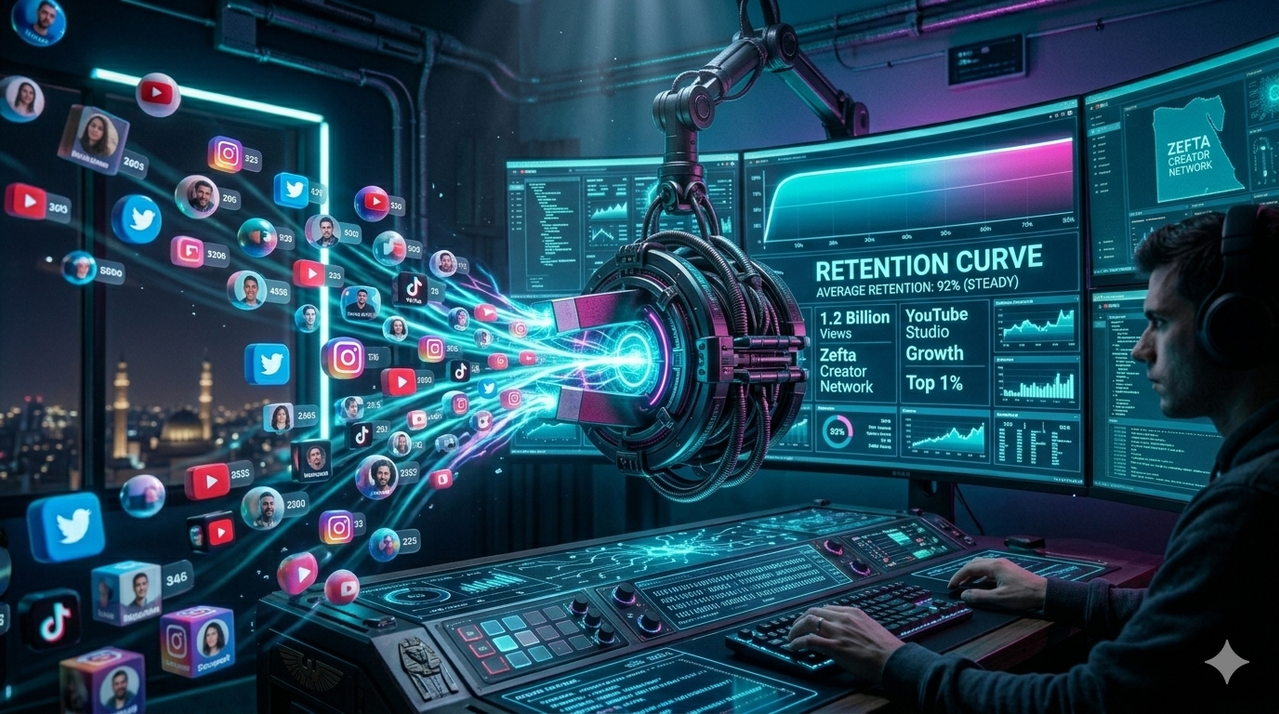
Simply put, it’s a trap, but a slick one. You design your video second by second so the viewer’s brain never gets a single quiet moment to think “meh, imma close this.” We’re playing on curiosity psychology, and to nail it, you need 3 sneaky moves:
Curiosity Loops
This is the move that makes the viewer say to themselves, “hold up, lemme see this part too.” You open a loop in the viewer’s brain that only closes at the very end of the video.
Example: if you’re doing a vid on “Top 5 Money-Making Niches in 2026,” don’t start with #5 and end it. Nah, start by saying: “there’s one niche on this list, the guy made $100k in a month while he was sleeping, I’ll tell you which one in the middle of the vid.” Boom – Curiosity Loop opened. The viewer won’t close the vid till they know the niche.
Pattern Interrupts
The human brain hates repetition. If the viewer sees the same frame and the dude talking in the same tone for 10 seconds, their finger’s gonna go to another vid. That’s where “Pattern Interrupt” comes in.
Example: every 5-7 seconds, hit ‘em with a surprise. Sudden Zoom In, a tiny “ting” sound, color shift from blue to orange, or even a funny meme in the middle of serious talk. This resets the viewer’s brain and forces them to pay attention again.
Strategic Pacing
A video is like a “match,” you can’t go all attack and you can’t go all defense. You gotta know when to speed up info and when to slow down so the viewer can keep up.
Example: at the start (the Hook), shots gotta be super fast, visuals moving back to back (Fast Pacing) to “lock in” the viewer. In the middle, when explaining heavy info, slow the pace a bit, use chill music, one clear shot. Before they get bored, crank it back up with quick scene changes.
Real examples from actual niches:
A- Storytelling: Instead of “once upon a time,” start with an AI-shot of a dude falling off a mountain with crazy wind sounds, and say: “At this moment, Ahmed thought his life was over… but what happened next? Nobody saw it coming!” Boom – Curiosity Loop, the viewer’s staying to see what happened to Ahmed.
B- Tech: Explaining a new software? Every time a tricky point comes, cut away to a quick stock shot of someone hitting their head on the wall, say “I know you’re stressed rn, but peep this move…” That’s a Pattern Interrupt making them smile and focus more.
Pro tip from a “dev” to a homie:
Since you’re rocking Angular, you know User Experience (UX) is everything. Videos have UX too. If the viewer feels “lost” or “bored,” they’ll hit Close.
So when editing, ask yourself every 10 seconds: “if I was the viewer, would I bounce here?” If “yeah,” hit them with a Pattern Interrupt. Change the frame, drop a SFX, or throw a shocking fact.
Bottom line:
In 2026, “good” content ain’t enough. “Engineered” content is the winner. Be smart, play with the viewer’s brain, don’t give them a chance to blink. As long as your Retention Curve stays high and flat, YouTube will push your vid to the top and the dollars will rain down.
5. AI-Driven Production Pipelines
The game now is all built on production lines like factories, exactly. You’re producing YouTube videos with AI while sitting with your leg over your leg.
So what does AI-Driven Production Pipeline mean? It means you’re making a machine where you put an idea in one side and out comes a product on the other side, which is the video, SEO, subtitles, and editing.
Back in the day, you’d sit scratching your head to get an idea and write a script. Now you adjust the stuff with ChatGPT. You don’t tell it “write me a script,” you give it a prompt that works for you and tell it to make a script that hooks viewers in the first 5 seconds and uses a storytelling style.
Instead of getting a voice actor who’ll fuss over you, you take the script and throw it into ElevenLabs, pick the voice you like, and adjust the settings so it sounds like a human voice.
Instead of using repeated images, you run Midjourney to get insane neon cinematic images, then go to the strongest video-making program in 2026, Runway Gen 3 – one click and these images move and turn into cinematic scenes, there’s no two alike in the world. Now you have exclusive content that’s all yours.
Practical example: a 22-minute video
- Video title: Future of Digital Currency
- 1–5 minutes: AI analyzes trends and writes the script.
- 6–10 minutes: voice gets ready and scene selection happens.
- 11–20 minutes: the factory assembles the video.
- Last 2 minutes: video is scheduled on YouTube with description and keywords.
Just like that, you finished a video that used to take 3 days in 22 minutes.
6. Thumbnail Psychology and Click Behavior
Back in the day we used to put any picture as a Thumbnail, but now that’s changed. You gotta make your store sign grab the viewer’s eye and break the scene. Even if you’re making a viral video, the sign has to break the scene. There’s a science called Pressure Psychology. People who hit high numbers know this science. They try to grab the viewer’s eye from the crowd and make them click the video.
While scrolling, the viewer’s finger makes the decision in less than 3 seconds. To make them stop, you gotta play on their emotions. If you’re making a video about YouTube money, instead of just putting a dollar image, put a person with a shocked face holding a check with a crazy amount. Here you’re playing on curiosity and greed at the same time.
Screen quality got insane. If your colors are weak, you’ll get lost. You gotta use colors that pop. Use a dark background with just one element in a bright color. The human eye is programmed to go for something different than what’s around it.
The thumbnail has to tell half the story and hide the rest. If the video is about MrBeast’s success secret, don’t just put a picture of MrBeast smiling. Put a file that says “Top Secret” with an arrow pointing to something mysterious, and boom, the viewer will click to see the video.
YouTube lets you upload two or three images for the same video, each targeting a different audience. Crazy trick: put a red arrow pointing to a silly thing in the image, because the human brain is more drawn to red.
7. Building a Scalable Content System
To turn into a digital business owner, your system has to scale. And scaling doesn’t mean you work longer hours. It means you build a strong structure that lets you increase output without losing quality.
How do you build this system?
- Document every step, from research to publishing, into a written guide. This ensures production keeps running even if you disappear.
- Adopt a production line mindset. Keep your system running so you can add new channels easily.
- Use automation tools to reduce manual work. A successful system is what lets you double your output from one video a week to a video every day without having to reinvent the system.
Bottom line: to dominate YouTube in 2026, forget luck and free hacks. Treat your channel like a factory, a production line running on the clock, from research and script to publishing and follow-up. Reverse-engineer videos that are killing it in the market, break them down, see the secret, and do the same but stronger and cooler.
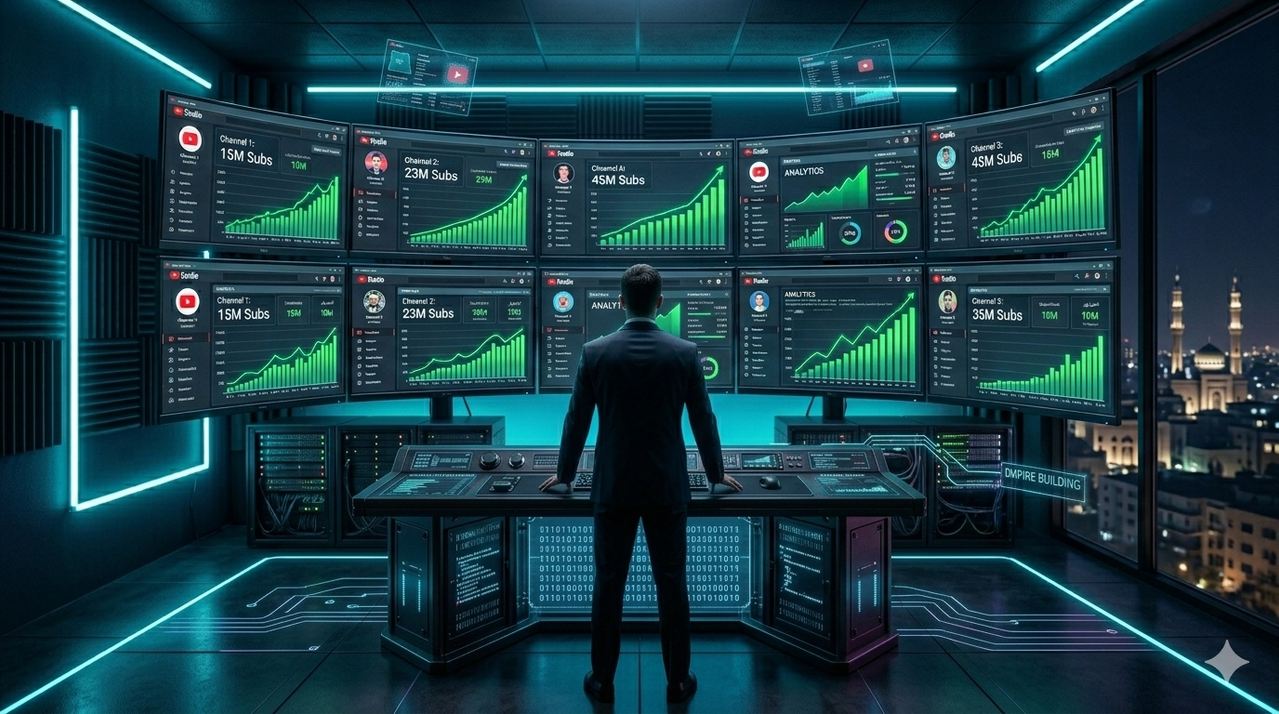
Most importantly, lock the viewer in the video: use curiosity loops, break monotony, connect AI tools into a pipeline that finishes videos in minutes, and create visual traps in thumbnails. Document every step to turn your channel into a system that works while you sleep, building a real digital asset that makes money.


0 Comments